Simplifying a Complex Data Exchange Ecosystem for the Global Automotive Value Chain
A UX case study on how I designed a modular, compliance-ready platform that allows companies— from mining operators to recyclers—to exchange structured & unstructured data effortlessly, even without sophisticated IT infrastructure.
Overview
The modern EV supply chain depends heavily on transparent, verifiable, and compliant data. Yet, most businesses—especially small suppliers—struggle to exchange data in formats required by emerging global standards such as digital twins and sustainability reporting frameworks.
The challenge was to create a platform that serves both extremes: high-tech enterprises needing automation and low-tech businesses relying on spreadsheets.
I designed a system where users could upload any dataset (JSON, CSV, custom schemas), map it visually to standardized structures, and exchange it through modular workflows that scale with their business needs.
Key Problems Identified
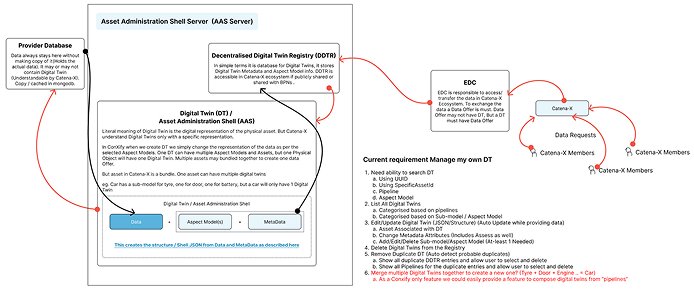
1. Fragmented Digital Capabilities
Some suppliers used ERP systems, while others relied on paper records or basic CSV files. The platform had to adapt to every maturity level.
2. Lack of Trust & Data Ownership Clarity
Businesses needed absolute visibility and control over who can access which data—creating a strong need for transparent, UX-driven permission and validation layers.
3. Complex Industry Standards
Digital twins and compliance schemas are difficult for non-technical users. We needed a simple, visual abstraction that anyone could understand.
4. High Volume Data Exchange
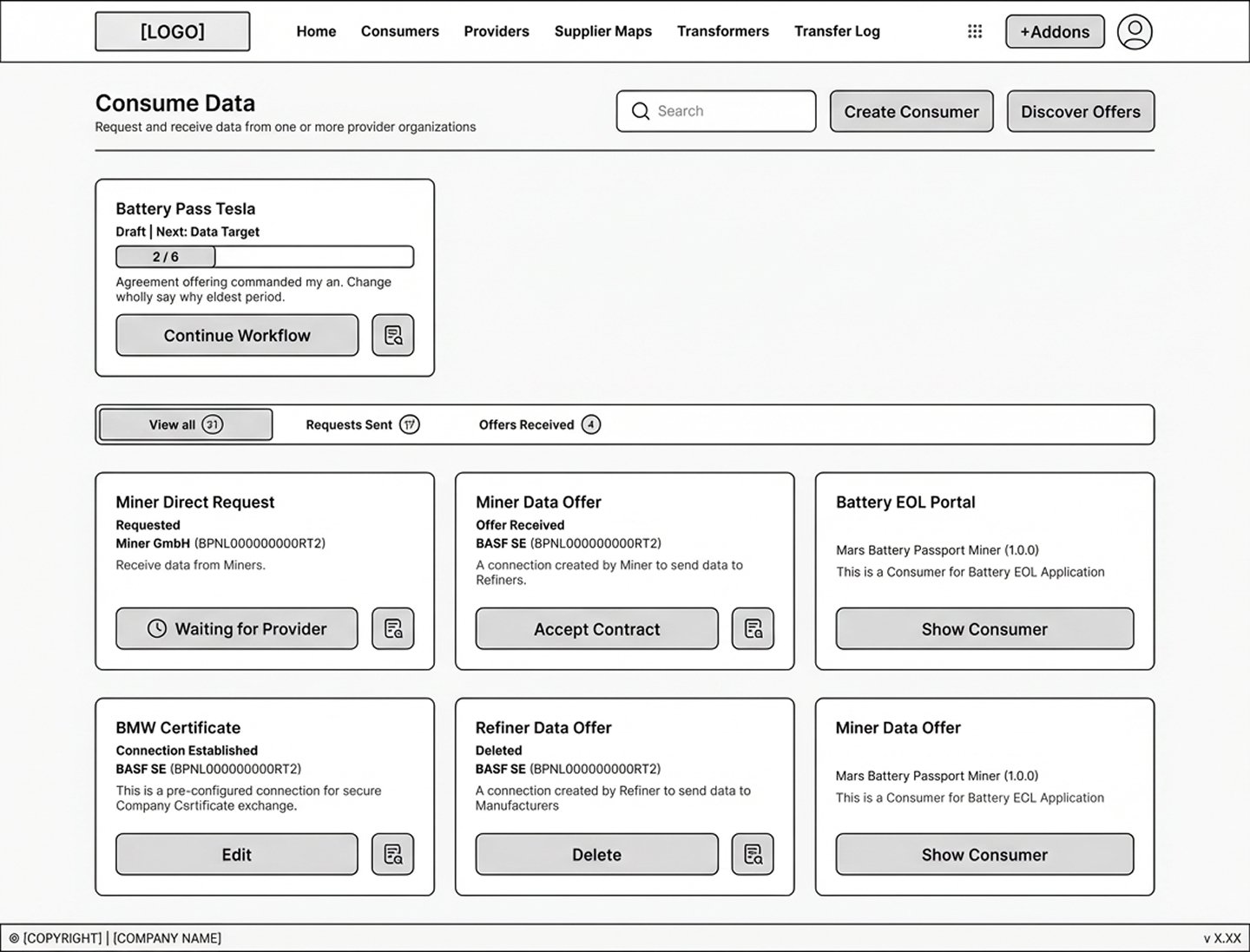
Some workflows required tens of thousands of providers sharing data with one requester. UX needed flexibility without becoming overwhelming.
Design Goals
- Zero-Friction Onboarding
Upload any file → detect schema → validate → exchange. No IT support required.
- Modular Experience
Users activate only the modules they need — keeping the UI clean and context-specific.
- Visual Data Mapping
A drag-and-drop system that translates complex schemas into simple visual relationships.
- Workflows at Scale
Directive-based automation for validation, access, and delivery.
Core Value Delivered
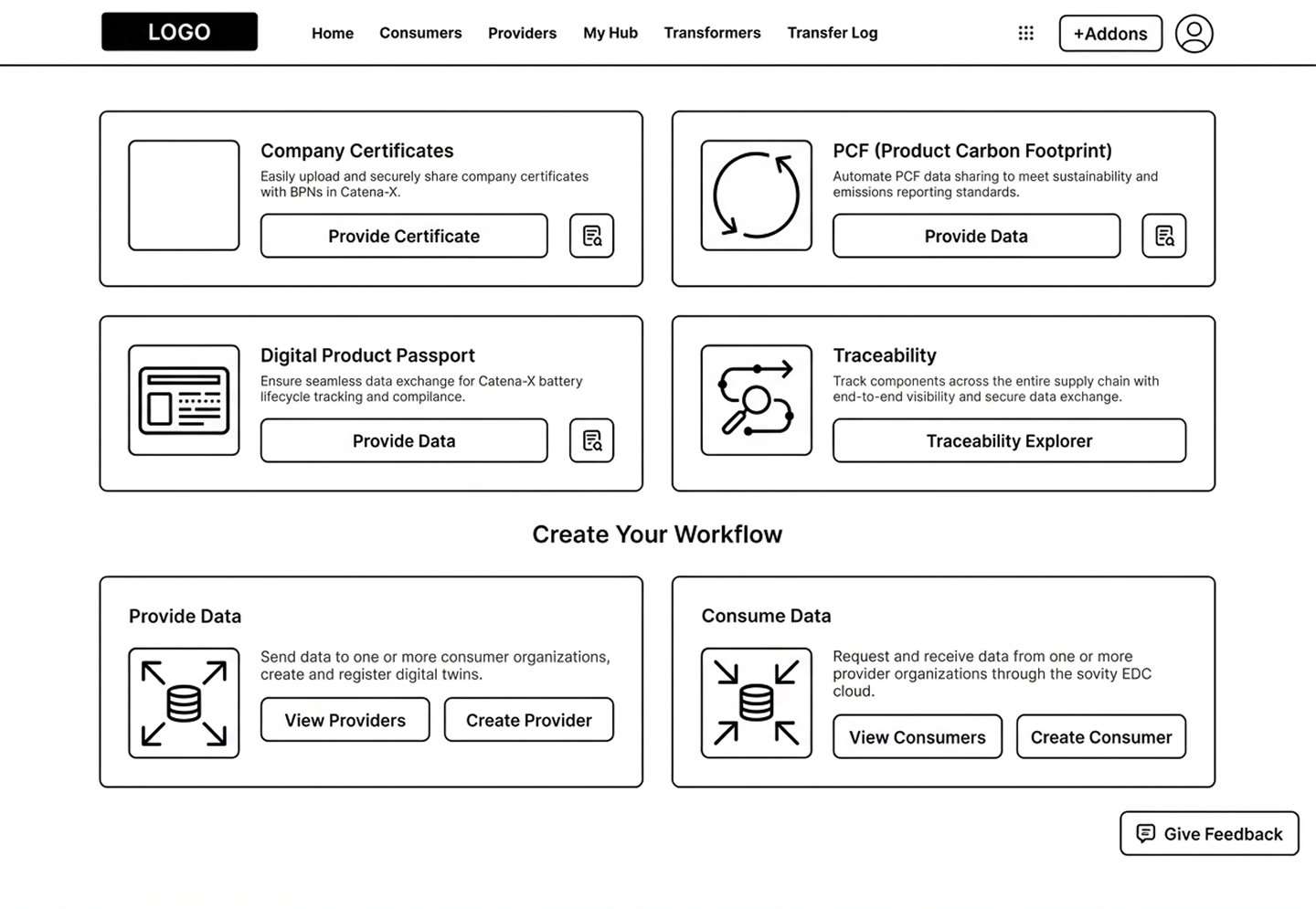
A One-Stop Hub for Digital Circularity
A unified space to manage workflows, digital twins, partner access, and validations. Users could scale from simple data imports to advanced directive automations.
Customisable Data Workflows
Users create tailored flows for their use cases: sustainability reporting, battery passports, supply chain transparency, or recurring partner updates.
One-Click Data Exchange
Critical data could be exchanged instantly across a network of trusted partners, removing manual effort across teams.
Digital Twin Management Simplified
Creating or updating digital twins became as easy as uploading a file and validating fields.
Key UX Flows
1. Schema Detection & Upload
Drag-and-drop → instant structure detection → compliance check → auto-suggestions for mapping or validation.
2. Visual Mapping Workspace
Two-pane mapping interface allowed users to create relationships between custom fields and standardized schemas, with reusable templates.
3. Module Store
Users selectively enable features: reporting, workflow automation, partner management, digital twins, or sustainability tools.
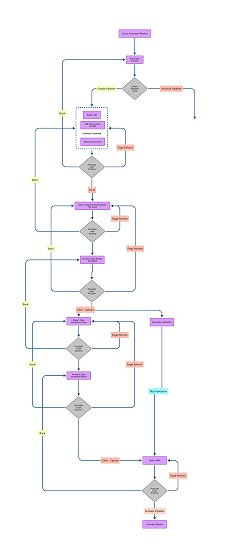
4. Advanced Workflow Automation
A trigger → condition → action interface created high-volume automated exchanges without writing code. Power users could build enterprise級 directives.
Wireframes
Impact
The redesigned UX enabled organizations across the supply chain— including small workshops and large OEMs—to participate in digital ecosystems without the typical complexity of compliance or data engineering.
- Huge reduction in onboarding effort
- 50% less manual data preparation via visual mapping
- Highly scalable workflows for thousands of partners
- Increased adoption due to modular, need-based UI
- Whitelabled solution for OEMs